

A few months ago, a prospective homebuyer called me and said, "I know I'm not ready yet. My credit score is only 640." I asked a few questions about their income, savings, and debt. A few minutes later, they realized they were much closer to buying a home than they thought.
The problem wasn't their credit score. The problem was that they'd convinced themselves they needed a 700 before talking to a lender.
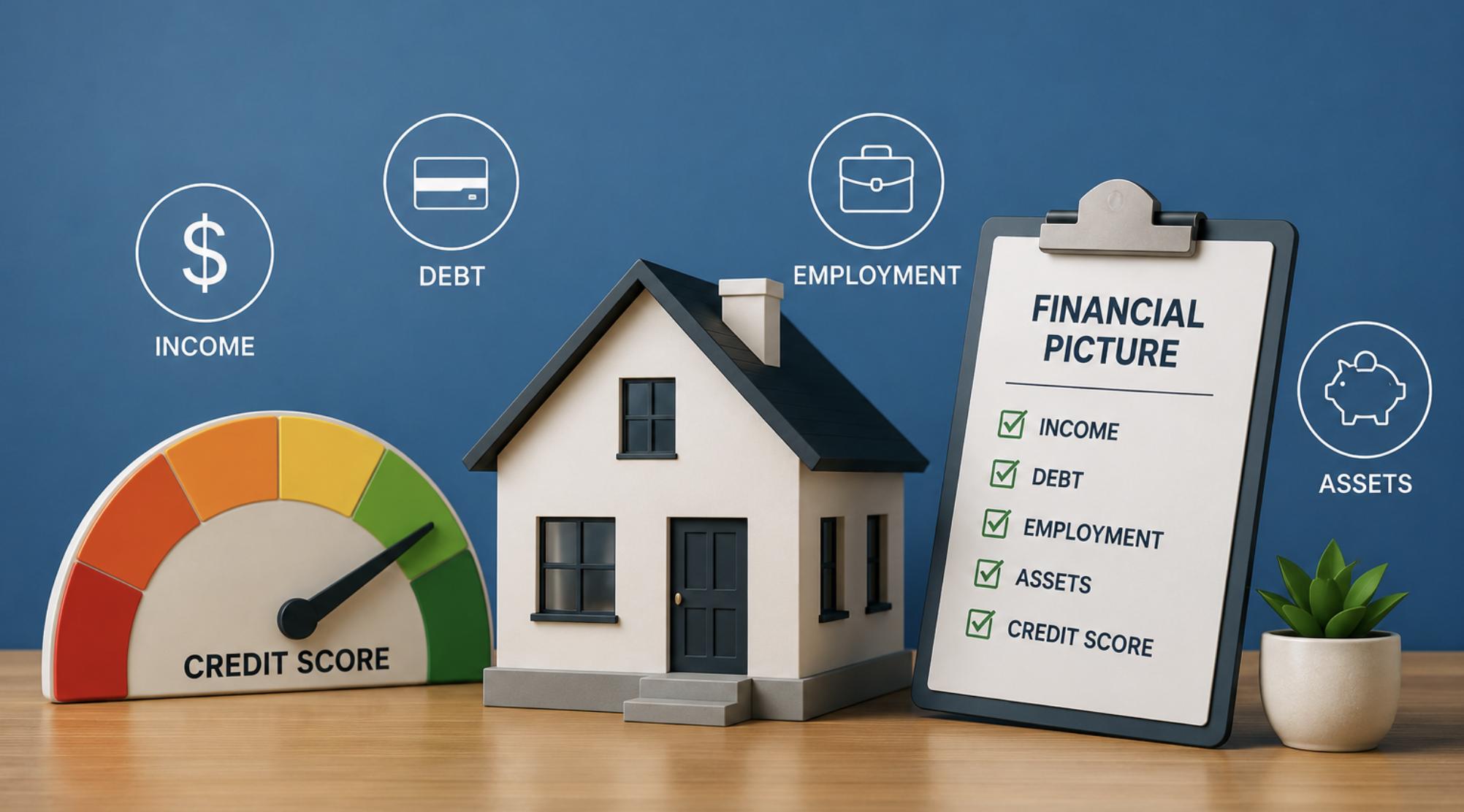
No, you do not need a 700 credit score to buy a house. While a higher score can help with pricing and loan options, lenders look at your full financial picture, including income, debt, employment history, assets, and the loan program you're using.
Where Did the 700 Credit Score Myth Come From?
Part of the confusion comes from the way credit scores are discussed online. Many people assume buying a home works like getting approved for a credit card: hit the magic number and you're in. Miss it and you're out.
But mortgages don't really work that way.
While credit scores matter, lenders aren't looking at your score in isolation. They're evaluating your overall financial picture to answer one much bigger question: can this borrower reasonably afford this loan?
That's why two buyers with very different credit scores can sometimes have surprisingly similar outcomes when they apply for a mortgage.
Beyond the Score
What Lenders Actually Look At
Your credit score matters, but it is only one piece of the puzzle. Lenders review the full financial picture to understand whether the loan makes sense.
Credit Score
Helps show how you have managed debt in the past.
Income
Shows whether your income can support the monthly mortgage payment.
Debt
Existing payments can affect how much home you qualify for.
Employment
Stable work history can help strengthen the overall application.
Assets
Savings can help cover the down payment, closing costs, and reserves.
Why Credit Score Doesn't Tell the Whole Story
Imagine two homebuyers applying for a mortgage.
Buyer A
- 760 credit score
- $20,000 in credit card debt
- Recently changed jobs
- Very little savings
Buyer B
- 640 credit score
- Stable employment
- Minimal debt
- Strong savings account
At first glance, most people assume Buyer A is the stronger borrower because they have the higher credit score. But mortgage approvals aren't based on a single number.
A credit score can tell lenders how you've managed debt in the past, but it doesn't tell them whether you can comfortably afford a mortgage payment today. In some situations, Buyer A may still be the stronger borrower. In others, Buyer B could have advantages that aren't reflected in their credit score alone.
The point is simple: credit score matters, but it doesn't tell the whole story.
The Difference Between Qualifying and Getting the Best Deal
This is where a lot of buyers get tripped up. You may not need a 700 credit score to qualify for a mortgage, but that doesn't mean your score is irrelevant.
A higher credit score can potentially help you access better loan pricing, more program options, and lower overall borrowing costs. So yes, improving your credit can be worth it. But waiting years to reach a perfect number before even having a conversation with a lender may not be the best move.
A 640 score may still get you in the game. A higher score may simply give you better options once you're there.
The goal is not always to have perfect credit. The goal is to understand where you stand, what options are available, and whether improving your score would meaningfully change your buying power.
What If Your Credit Score Isn't Where You Want It To Be?
If your credit score is lower than you'd like, don't panic and don't start taking random advice from the internet. Some credit moves help. Others can backfire, especially when you're preparing to apply for a mortgage.
Common steps that may help include making payments on time, lowering credit card balances, avoiding new debt before applying, and reviewing your credit report for errors. But the right strategy depends on your full situation.
That's why talking to a mortgage professional early can be so helpful. Instead of guessing for months, you can get a clearer picture of what matters most and what steps may actually move the needle.
Common Questions
Credit Score FAQs
Can I buy a house with a 620 credit score?
Possibly. Many conventional loan programs use 620 as a common starting point, but approval depends on the full application, including income, debt, assets, property type, and lender guidelines.
Do I need a 700 credit score to buy a house?
No. A 700 credit score can help, but it is not a universal requirement. Many buyers qualify with scores below 700 depending on the loan program and their overall financial profile.
What do lenders look at besides credit score?
Lenders typically review income, debt-to-income ratio, employment history, assets, down payment funds, credit history, and the specific loan program being used.
Should I wait until my credit score improves?
Not always. If improving your score would significantly help your loan options, waiting may make sense. But you do not need to guess. A lender can help you understand whether your current score is truly holding you back.
The Bottom Line
If you've been waiting to buy a home because your credit score isn't 700 yet, don't automatically assume you're not ready.
A higher credit score can absolutely help, but lenders do not approve mortgages based on a single number. They look at your credit, income, debt, employment history, assets, and overall financial profile.
The biggest mistake many buyers make isn't having a 640 credit score. It's assuming they can't buy a home because of it.
The best way to find out where you stand is to speak with a mortgage professional who can review your situation and help you understand your options.
Sources
- U.S. Department of Housing and Urban Development
- Fannie Mae Selling Guide
- Consumer Financial Protection Bureau
Loan program guidelines, credit requirements, and qualification standards can vary by lender, borrower profile, property type, and loan program.


.svg)